
Resources
Tools, trainings, resources, and opportunities from the COO Learning Community and other local, regional, and national groups below.
Our Toolkits page has toolkits and templates that help organizations manage community collaboration fiscal sponsorship relations, and more — in English and Spanish.
Looking for Best Starts for Kids capacity building consultants? Visit the Capacity Building page.
Have an additional resource to share? Need a tool or resource not listed? Other questions? Reach out to us at info@coopartnerships.org!
Upcoming Learning & Capacity Building Events
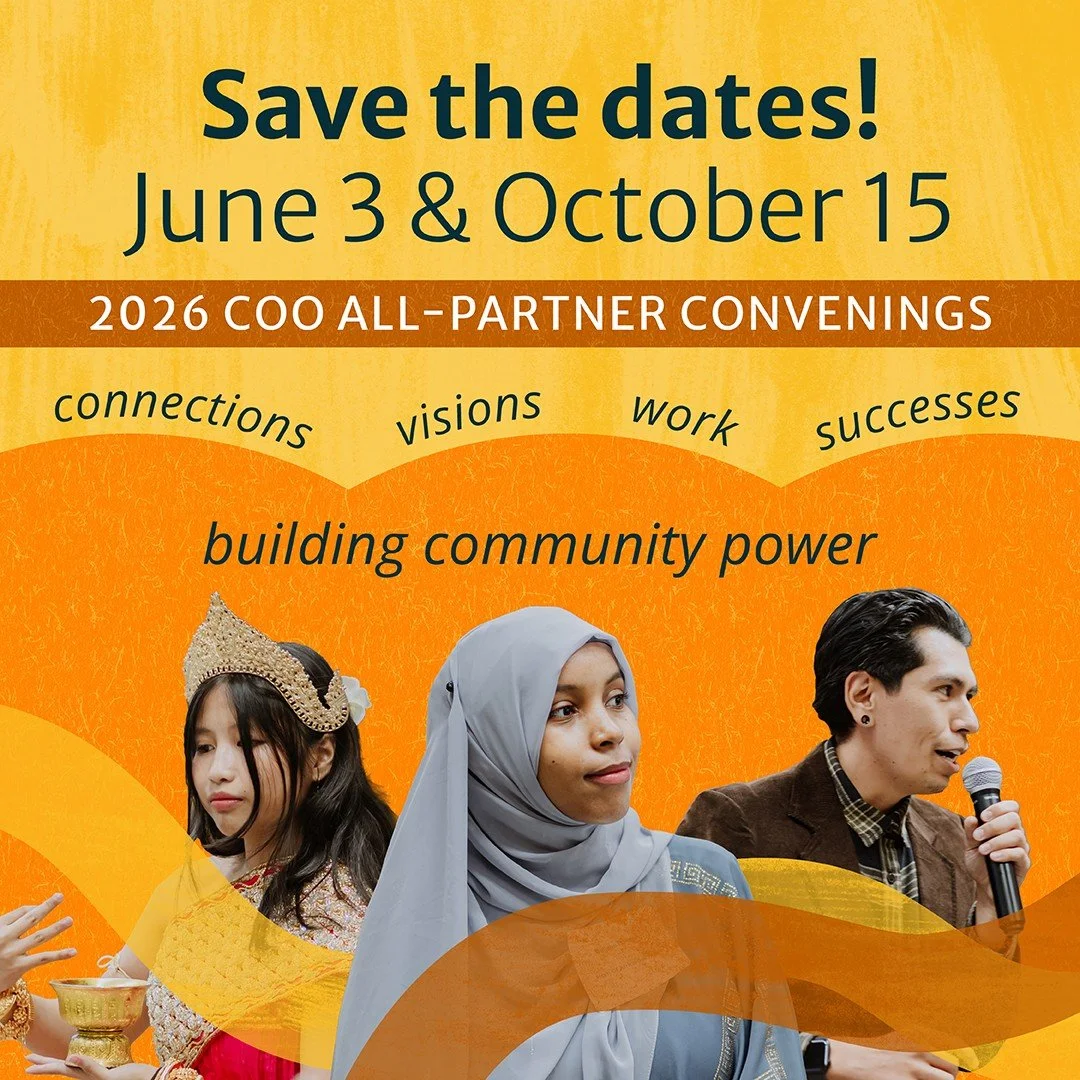
This year’s convenings will focus on those organizations and partnerships currently funded by COO and our Best Starts policy and systems change partner, the Healthy & Safe Environments (HSE) strategy.

Search all Resources:
Learning Community Tools & Resources
Jump to a section: Communications and Storytelling | Community Connections | Economic Opportunity | Organizational Operations | Policy & Systems Change | Resources from COO partners and wider network
Organizational Operations
The Learning Community invites you to participate in a two-month hybrid learning circle series (in-person and virtual gatherings) designed to help community leaders, staff, and board members shift from extractive models of governance to liberatory, community-rooted practices. Register by May 11!
En estos tiempos de creciente incertidumbre, le invitamos a acompañarnos a una capacitación de facilitación dividida en dos partes. Esta capacitación está diseñada para ofrecer herramientas que faciliten espacios adaptables, conectivos y creativos. Facilitación Creativa ofrece herramientas y marcos de facilitación significativos, que nos ayudan a alcanzar nuestros objetivos y generan un espacio para honrar nuestra humanidad.
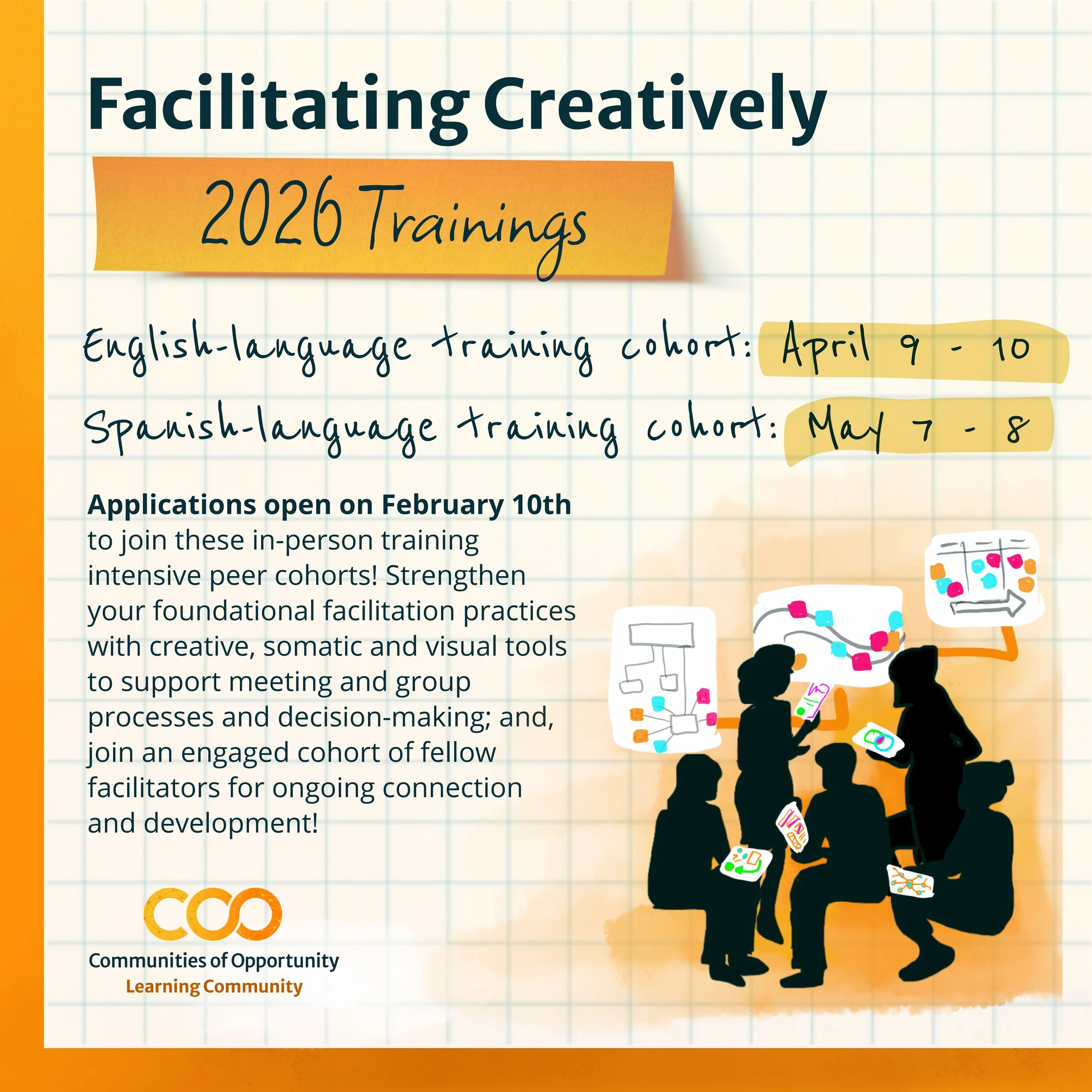
Strengthen your foundational facilitation practices with creative, embodied, and visual facilitation tools to support meeting and group processes and decision-making. Applications close March 9!
Have a question about financial planning, management, or reporting? Contact Coach Amy through the financial coaching hotline and get answers & resources for FREE!
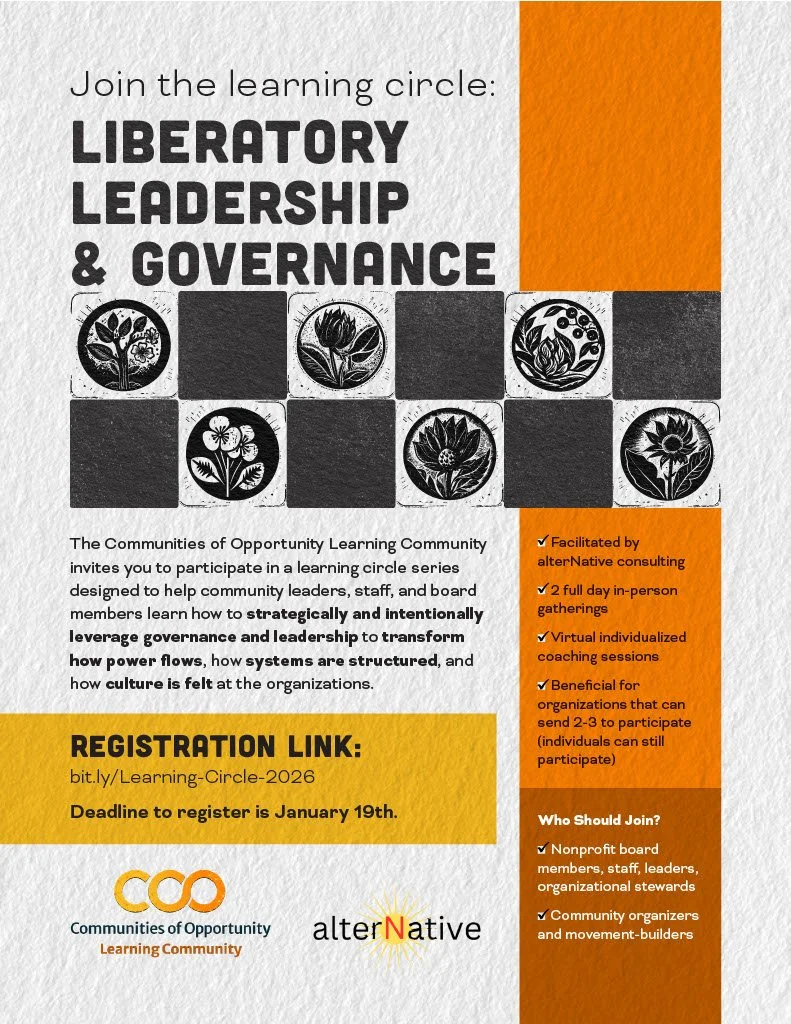
The Communities of Opportunity (COO) Learning Community (LC) & alterNative invites you to participate in a learning circle series designed to help community leaders, staff, and board members learn how to strategically and intentionally leverage governance and leadership to transform how power flows, how systems are structured, and how culture is felt at the organizations.
Capacity building support is available to COO & Best Starts for Kids contracted/funded organizations - AND - support is available via the COO Learning Community for groups working in alignment with COO’s mission, vision and values who are not currently funded.

COO hosted a series of two workshops to learn tools and practices around financial planning and sustainability. These workshops offered case studies on how organizations are using financial information and long-range planning to make strategic decisions about their visionary work, and offered tools and strategies to create financially sustainable and health organizations.
This workshop focuses on basic fundamentals of what fiscal sponsorship is - including a particular focus on exploring how to best support youth-led groups who are interested in being fiscally sponsored and working with youth-driven projects.This panel included, youth and community leaders who have had successful experiences as a fiscal sponsor and/or as a fiscally sponsored group and what contributed to a healthy relationship.

COO Learning Community strategy partnered with Communities Count to bring workshops and capacity building resources on data and evaluation to community partners.

New Toolkits & Capacity Building resources for community organizations — learn more about supports available through the COO Learning Community

Financial Oversight is an important part of leading an organization – we need good financial information and tools to make sound strategic decisions about our work. In this workshop, Amy Michael and Sarah Tran discuss how organization leaders approach financial oversight. They share some tools and practices you can use at your own organization to check in on your own financial oversight. Recorded March 8, 2022

In this workshop trainers do a deep dive into capital campaign readiness and the importance of organizational capacity for effective capital campaign fundraising. Regardless of where you are on your campaign journey, if you know a capital campaign is on the horizon, taking steps now to build out your fundraising capacity is critical to your organization’s long-term success.

This workshop provides a high-level overview of capital campaign fundraising concepts and terms including campaign feasibility study, prospect research, gift pyramids, and other fundraising activities within the context of a capital campaign. Also included is a review typical capital campaign timelines and using a community-centric fundraising lens, an exploration of fundraising strategies that can leverage broader support for an organization’s vision and mission by centering on a shared vision for the future.
Hear about what goes into envisioning, planning, and carrying out a communication plan for fundraising and capital campaigns. Explore what networks are important and how to find and build relationships with crucial partners while keeping your community centered and connected through the process.

Resources and tips to support inclusive and equitable online meetings and online meeting facilitation.
Communications and Storytelling
Interested in strengthening your storytelling, facilitation or narrative strategy skills? These self-guided courses from Storytellers for Change can support you in amplifying the impact of your narrative change and storytelling work. Support is available, while resources last, from the COO Learning Community to register in one of three programs.
This virtual showcase highlighted the work of five rooted community groups who worked to uplift the experiences of communities most impacted by COVID-19 and the culmination of their community-led data collection and storytelling projects conducted over 2021.
Workshop description: Illuminate what to consider when your communication starts local and then is shared more broadly. How does the strategy and tools change? What are the major thresholds, advantages, and challenges for different scales of audiences? Workshop focuses on scales of neighborhood, city, and county. Watch the recording here.
Learn more about crafting effective messages and getting audiences with local government to meet your goals. Build relationships and reputations that facilitate generative partnerships and ways to influence public leadership and represent your community.
COVID-19 has redefined nearly every process and task. This workshop will look at the digital tools for communicating at various levels (team members, clients, community members, funders) that can keep us socially connected while physically distant. These tools can be power campaigns even without pandemic restrictions.
Explore steps that align storytelling and policy change. We follow a process from idea to advancing community-centered solutions through formal policy change. How to translate culturally specific perspectives for white audiences, while staying authentic to our own communities and cultures.
Hear about what goes into envisioning, planning, and carrying out a communication plan for fundraising and capital campaigns. Explore what networks are important and how to find and build relationships with crucial partners while keeping your community centered and connected through the process.
Explore making appropriate and generative connections with media members. Ensuring your story is expressed in ways that promotes your mission and affirm your community. Exposing pitfalls and traps to avoid. Recording, press kit template and presentation slides available.
Building intercommunity coalitions. How to be in solidarity with those communities under most threat, even when not your own. Starting and maintaining alliances during COVID-19. Workshop featuring guest speaker Colleen Echohawk-Hayashi.
Community Connections

Reflections from the December All-Partner Convening - a day devoted to connection, learning, sharing, and restoration.

Communities of Opportunity (COO) is excited to share some of the highlights from the COO All-Partner Convening held on May 10, 2023 with Dr. Robin Wall Kimmerer. This event brought together individuals and organizations driven by a shared commitment to equity, justice, collaboration and positive change.

The Tesfa Program developed this web-based toolkit to increase the capacity of providers, organizations, and decision-makers to better connect and serve local Ethiopian communities. Check out the toolkit, accompanying podcast and ways to get involved here!
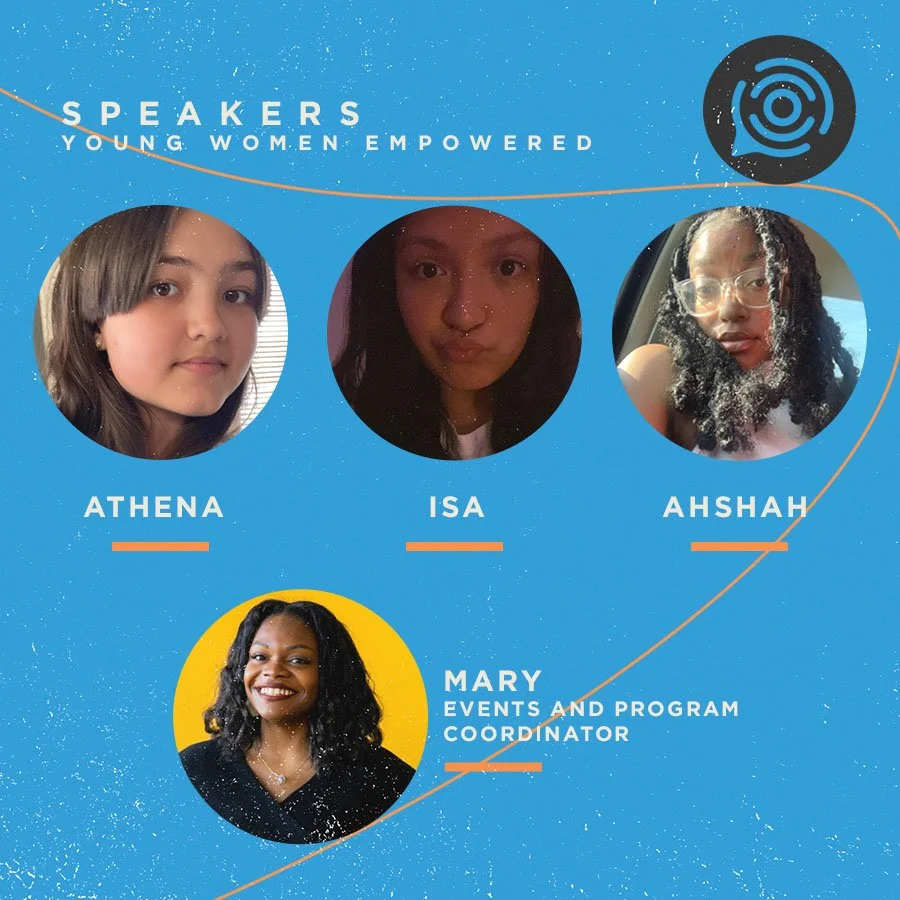
This conversation with youth leaders and staff from Young Women Empowered (Y-WE) explored how to create supportive and healthy spaces for youth leadership and development — and youth ownership of transformative organizing work.

The first two sessions from the GROUNDED 2022 Speaker Series are now available for viewing! Learn how local organizations and faith communities are responding to community needs and priorities in a time of global pandemic and displacement.

Videos and recap from COO’s September 2021 Meeting the Moment gathering, Community Conversations on Healing, Advocacy and Building the Future We Want.

Recapping the Cultivating Community Transformation discussion and reflections on the journey of COO — the difficulties of shifting systems and institutions to enter into more relational and authentic conversations with community, the early intentions of COO coalesce around shared values, listen to the leadership within communities, and the work to invest in and strengthen community partnerships that can inform and bring momentum to the policy and systems changes needed for a more equitable King County.

Join COO's "Cultivating Community" 6 part series, designed to amplify and learn from the efforts of our community driven partnerships.
Economic Opportunity
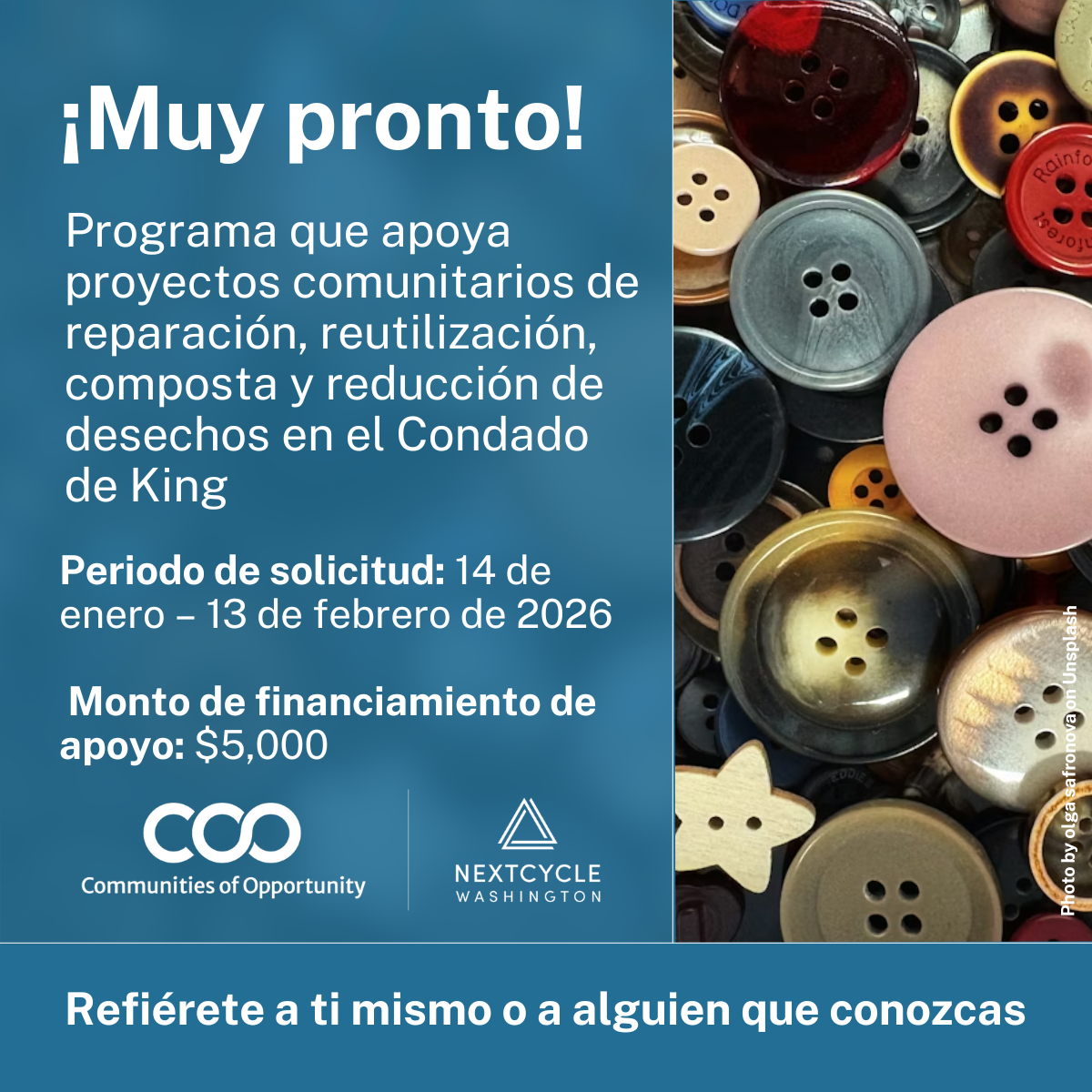
Si usted está llevando a cabo (o soñando con) un proyecto que mantenga los materiales en uso, genere una economía comunitaria o ayude a vecinos a compartir recursos, este programa podría ser una excelente oportunidad. ¡La solicitud se abre el 14 de enero!
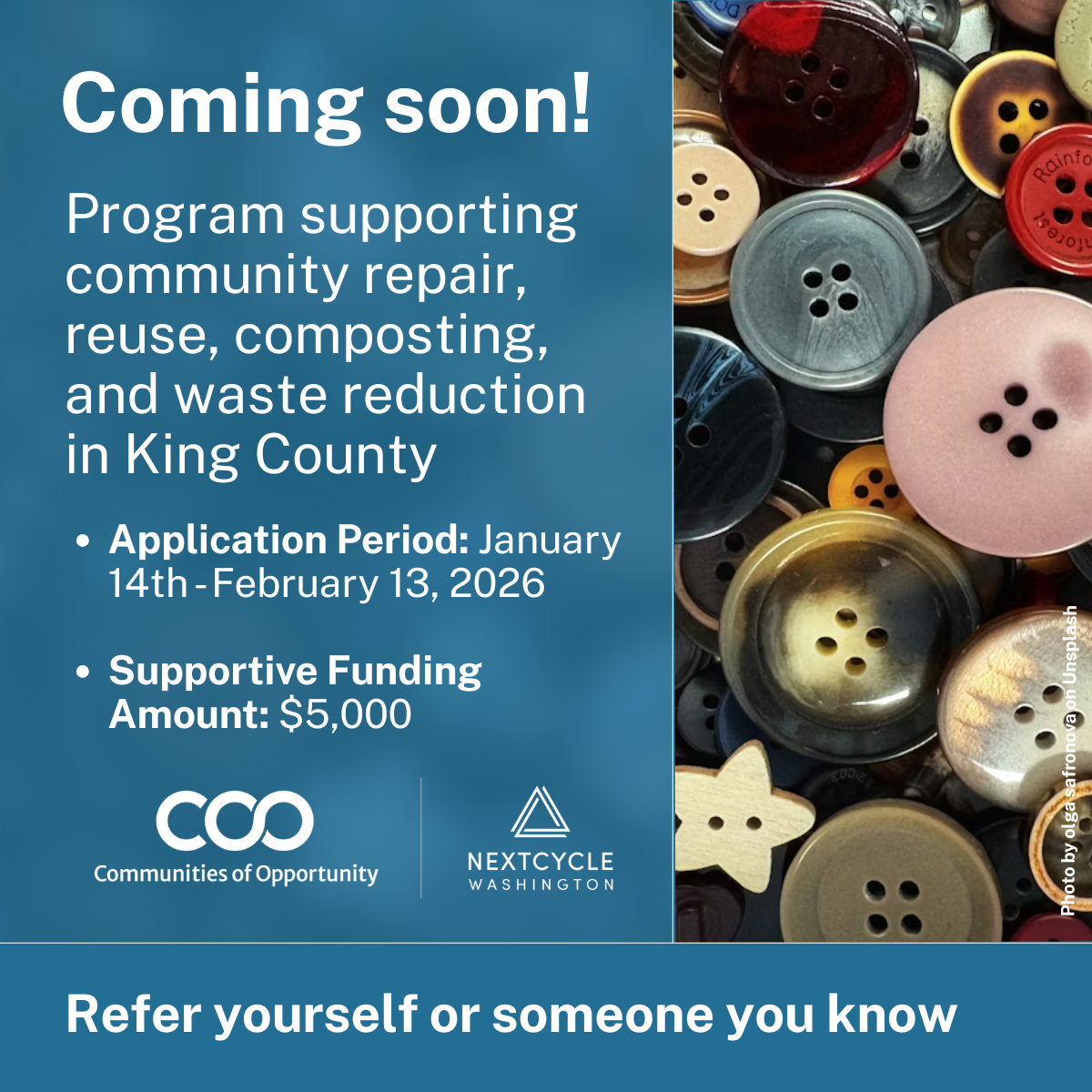
A pilot program that offers skills, tools, guidance, and early funding to support projects focused on repair, reuse, composting, and keeping materials in use in King County. The program is designed to make it easier for more people to access and participate in what’s known as the circular economy. Applications open January 14!

In this second part of the Commercial Affordability Summit recap, read about other current programs and models of commercial affordability and access to capital and support for small business and entrepreneurs: from those led by the City of Seattle such as Restored; to some of the most community rooted examples of commercial affordability projects.

With the Commercial Affordability Summit convening, COO sought to share what we learned from the pilot project, which concluded in 2022, and provide a platform for learning about additional strategies, models and programs that are currently being designed and implemented in support of an equitable and thriving small businesses environment and greater economic justice.

Communities of Opportunity (COO) and Grow America (formerly National Development Council) hosted this 3 session Asset Management Training series for community-based organizations or individuals that own real estate, are developing a space to own, or considering ownership in the future.

2021 Community Development Lunch & Learns series’ recordings are now viewable. These alternating deep dives on specific topics and issues of equitable community development, offered opportunities for participants to ask questions and discuss their projects with peers and community development experts.

In this first session, participants explore community-based strategies to build an equitable and regenerative economy, using the Just Transition framework.

In this second workshop, the focus is on the need to create and build new economic structures rooted in the experiences of our community.
Policy & Systems Change
The Learning Community invites you to participate in a two-month hybrid learning circle series (in-person and virtual gatherings) designed to help community leaders, staff, and board members shift from extractive models of governance to liberatory, community-rooted practices. Register by May 11!
With the Commercial Affordability Summit convening, COO sought to share what we learned from the pilot project, which concluded in 2022, and provide a platform for learning about additional strategies, models and programs that are currently being designed and implemented in support of an equitable and thriving small businesses environment and greater economic justice.
COO and the Seattle Foundation partnered with Bolder Advocacy to offer a training on the fundamentals of nonprofit advocacy. A PDF of the presentation may be accessed here and a recording of the training can be accessed here.

To support continuous improvement and learning for equitable contracting work COO sought to document where and how COO has been successful in creating more equitable procurement processes, particularly in the area of contracting, and what gaps continue to exist. The Equitable Contracting Report here, summarized a review of King County COO Community Service Agreements and Consultant Contract processes, best practices from the field, and themes from key informant interviews with COO community partners.
Learn more about crafting effective messages and getting audiences with local government to meet your goals. Build relationships and reputations that facilitate generative partnerships and ways to influence public leadership and represent your community.
COVID-19 has redefined nearly every process and task. This workshop will look at the digital tools for communicating at various levels (team members, clients, community members, funders) that can keep us socially connected while physically distant. These tools can be power campaigns even without pandemic restrictions.
Building intercommunity coalitions. How to be in solidarity with those communities under most threat, even when not your own. Starting and maintaining alliances during COVID-19. Workshop featuring guest speaker Colleen Echohawk-Hayashi.
Resources from COO partners and wider network:
An online training to learn AORTA's principles of conflict work and build foundational mediation skills. Whether you're exploring if mediation is a role you want to take on, trying to understand how mediation fits within broader conflict work practice, or are already doing conflict support, this training will equip you with practical approaches and foundational mediation skills to build your confidence and skill set.
The latest free online version of the Lean Co-op curriculum from start.coop to develop more successful, scalable, and higher-impact cooperatives
The WA Starter Home Plan Townhouse Design Competition is an ideas competition, but its purpose is to generate usable floor plans that will expedite and increase the production of affordable starter homes. Design the future of affordable homeownership in Washington.
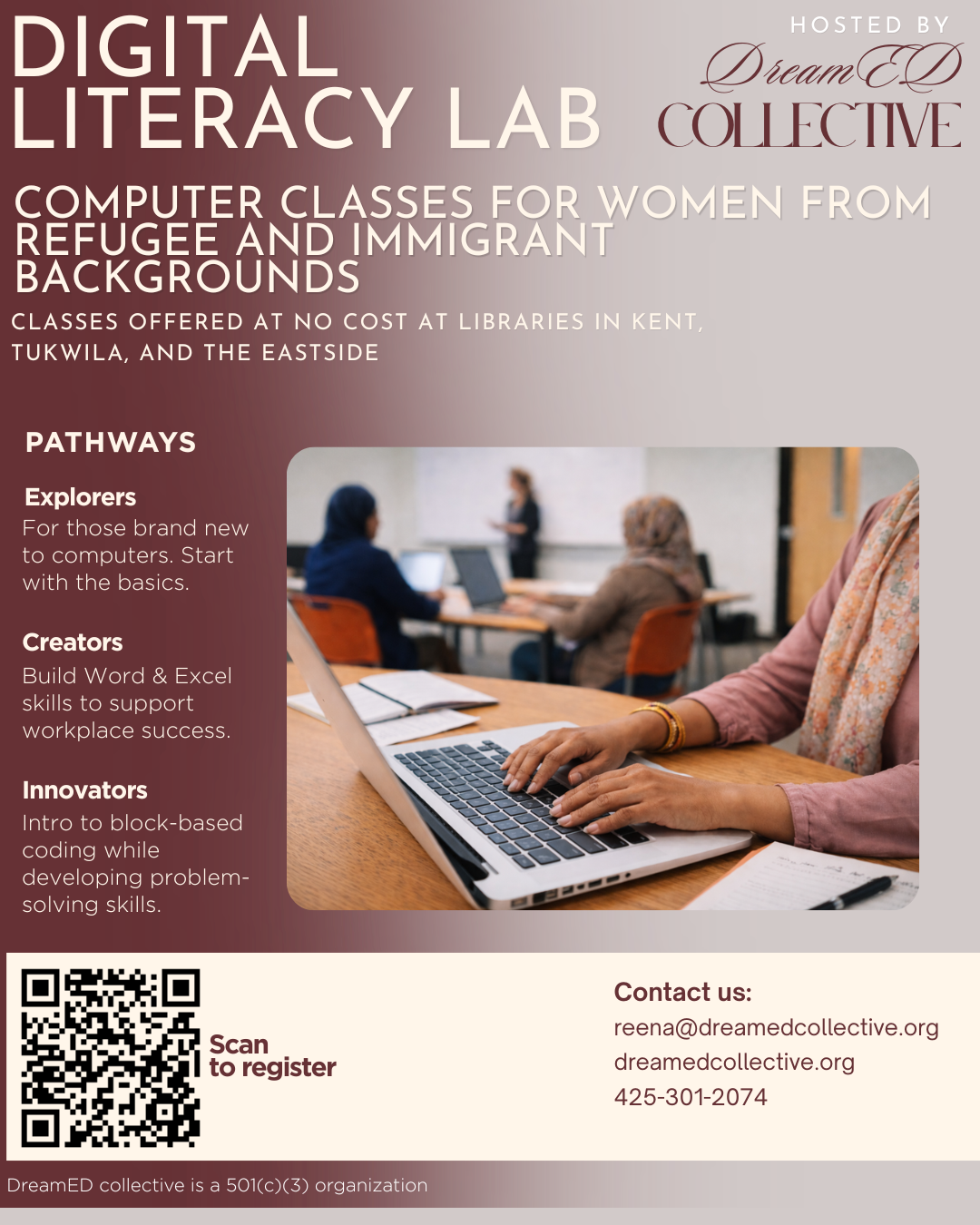
Computer skill-building classes for women from refugee and immigrant backgrounds, all levels - all classes are in-person, small group, and offered at no cost to participants.
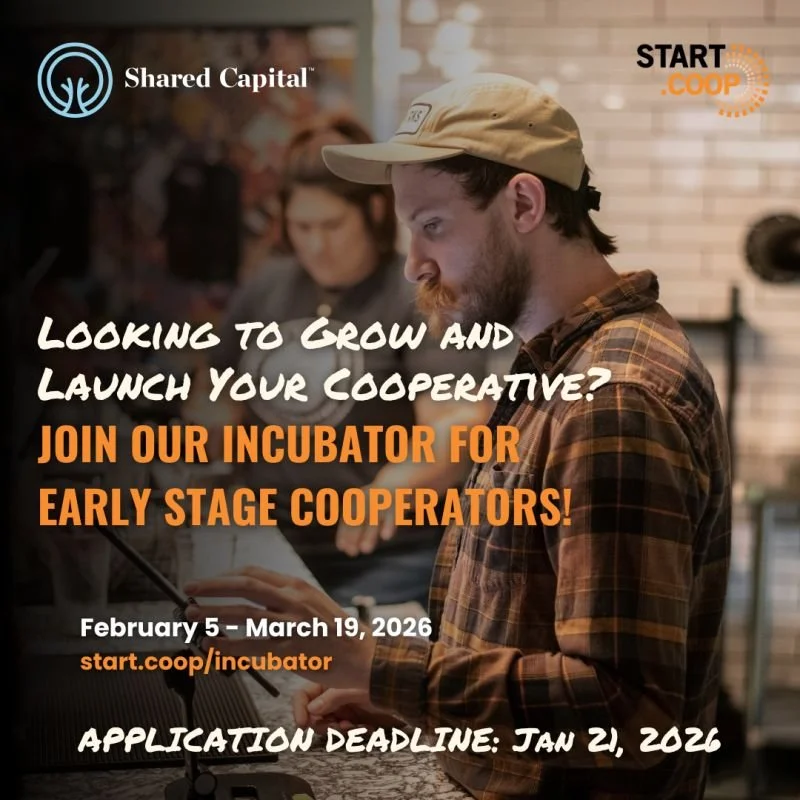
Start 2026 by building a cooperative that lasts.
Applications are now open for the Spring 2026 Cooperative Business Incubator, supported by Shared Capital Cooperative and facilitated with Start.coop.
Due to its popularity and strong feedback, SMT is offering this intensive for the third time. The training consists of five sessions that cover the key elements of narrative, storytelling, and visuals, with a focus on activating sharing in an ethical, trauma-informed manner. It also includes topics like building an effective amplification network, partnering with micro-influencers, and the best combination of tools for documenting stories.
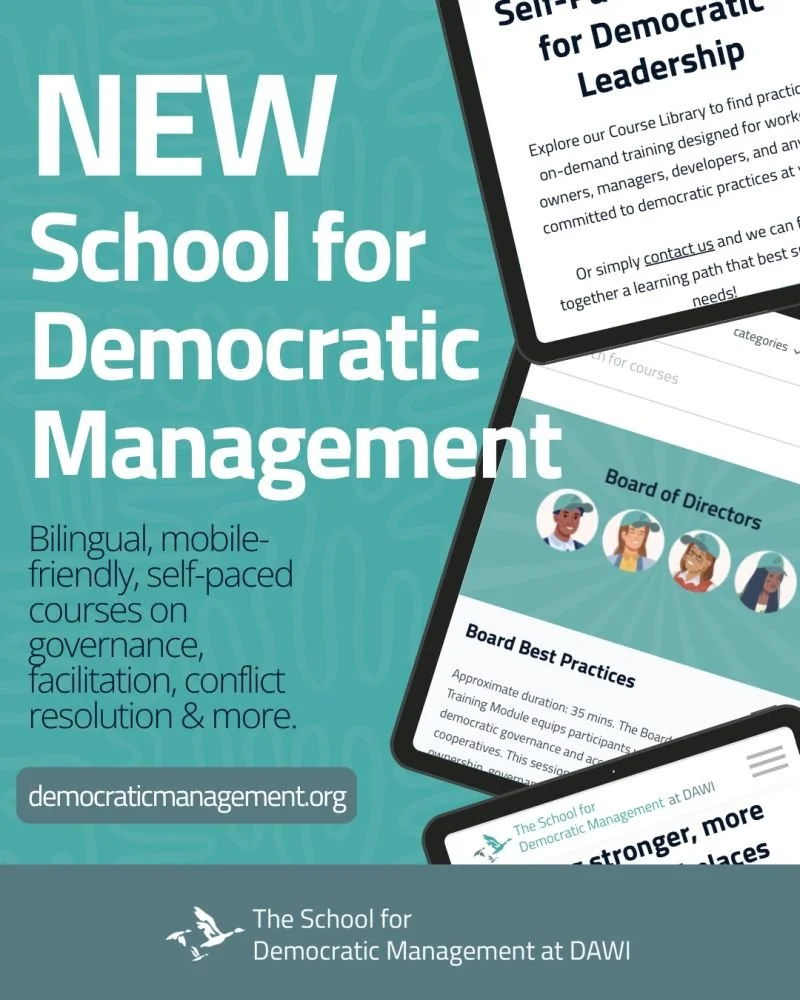
Effective management unlocks talent and distributes leadership, increases job satisfaction, and cultivates collaboration in the workplace. The School for Democratic Management gives you tools you can use right away to build the culture that your company needs. Democratic management is committed to high levels of participation - not as an option, but as an imperative.
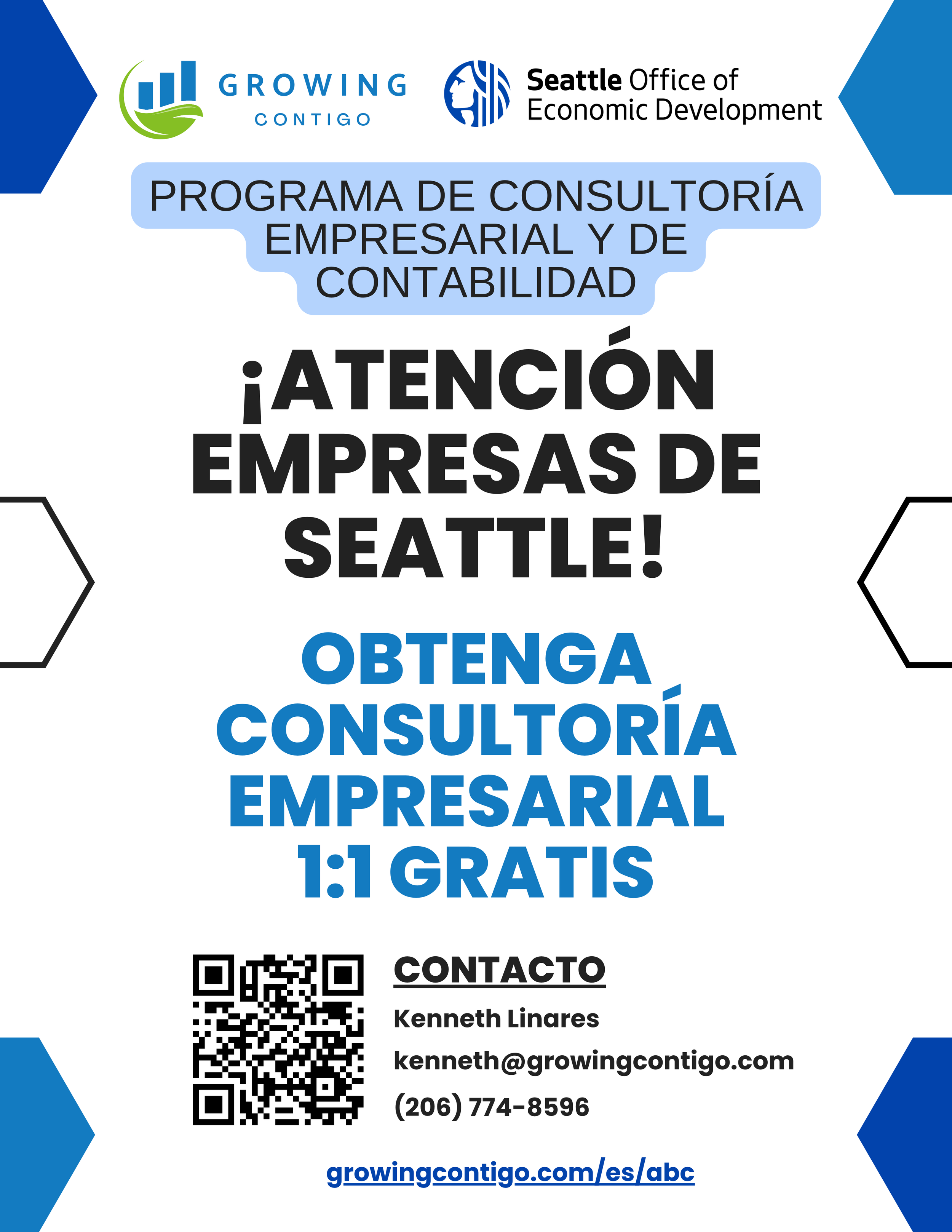
The Accounting and Business Consulting (ABC) Program, established by the City of Seattle’s Office of Economic Development, offers Seattle-based small businesses and entrepreneurs free consultations with Technical Assistance (TA) Providers also known as ABC Consultants, including Growing Contigo.
A network of leaders committed to bridging across difference to build belonging, strengthen democracy, and counter authoritarian populism in Europe and North America.

Best Starts Early Support for Infants and Toddlers (ESIT) strategy is seeking community members to join a new Centering Black Excellence Community Workgroup! The workgroup will help guide ESIT priorities and recommendations so that they remain rooted in Black and African American community wisdom.
A five-month training cohort for groups working to establish Solidarity Economy ecosystems in their local regions. The goal is for groups to connect movement theory, values, and skills to their own regional contexts, with the ultimate aim of establishing functioning Solidarity Economy ecosystems that meet community needs.

How King County is organizing with other local entities and fighting back against the federal administration directives that affect our communities
In the wake of and in anticipation of Congressional investigations, expansion of the counter-terrorism framework through administrative measures, and attacks on nonprofits, the Charity & Security Network (C&SN) has developed and updated resources for the non-profit sector linked here.

The Washington Nonprofit Legal Checklist is intended to help nonprofits in Washington State avoid common legal risks and achieve better legal health. This is not legal advice, though the materials were created by the lawyers at Communities Rise.

An introductory toolkit for mutual aid organizing—from starting a group to sustaining it for the long haul

This program is ideal for: Anyone that is a part of movement work (activists, organizers, staff, etc.) that is ready to develop a stronger politic and take up practices of access and disability justice. General alignment with the 10 principles of Disability Justice.

What do you do when a story about your community feels all wrong?
When others, detached from your struggle, reinforce messages that completely miss your dreams and reality? When your community is under attack and the truth is being flattened and replaced by disinformation? You change the narrative and we fight back!

Repairing Roots: Historic Black Towns and Spatial Reclamation explores how these communities can guide national and local efforts for reparative spatial justice and emphasizes that their preservation and prosperity should be a top priority for policymakers, philanthropic organizations, and public officials. It calls for an approach led by these communities themselves, centering their voices in shaping the path to lasting repair and renewal.

How Authoritarian Populist Politics Thrive in Contemporary Democracies — Key concepts to understand politics beyond the left-right paradigm. How can we bridge the gaps between "us" and "them" in a world divided by fear and grievance? This article explores:
- The blend of populist rhetoric and authoritarian practices
- The rise of these movements in democratic nations
- How exclusion deepens societal divides

Election cycles can be opportunities to deepen community engagement, sharpen narratives, and clarify organizational and movement values. Even after Election Day, how can we prepare ourselves as individuals and organizations to play the right roles, to respond quickly to unfolding events, and to buttress our connections and partnerships?
Divided into two parts, the Democracy Resilience Toolkit is designed to prompt discussion and action on protecting racial equity in the face of political disruption.
These national rapid-response calls are designed to support *BAMEMSA organizations + partners in strategic response/defense and strategy development.
Vision Change Win (VCW) rapid response supports all left movement organizations, leaders, and organizers dealing with or anticipating a community safety incident.
A toolkit from Storytellers for Change to analyze dominant narratives and develop anti-racist narrative strategies in community development.
The General Start-Up Co-op Academy takes you from “dream stage” to “shovel ready” in 10 weeks. You’ll have weekly sessions to learn about cooperative ownership, democratic management, and cooperative economics.
Want to craft compelling narratives that drive real climate action? The DIY Narrative Research Methods guide from Climate Advocacy Lab can help!
This FAQ resource was created to accompany the more robust legal guidance document, Advancing Racial Equity: Legal Guidance for Advocates.
2025 has brought with it the mainstreaming of misleading and deceptive narratives and practices to shape opinions and influence decision-making. Prebunking, a proactive approach that equips people with the tools to recognize falsehoods and manipulation before encountering it, has proven to be an effective strategy for building people's resilience to online harms.

For many communities and nonprofits, the current landscape is confusing and alarming. In this FAQ, BMP focuses on how nonprofits could be affected by the current landscape, with an emphasis on those who serve vulnerable communities that are being targeted by many federal actions.

Office Hours are donation based, 30 minute appointments with an AORTA member who will offer thought partnership and one-on-one consultation; they are designed for individuals who are a part of or starting groups working towards racial, economic, and gender justice and are committed to power sharing and deep democracy.