
Celebrating the COO-NextCycle Capacity Building program participants!
Eight participants leading teams and organizations building new and early stage circular economy programs or businesses joined this year’s inaugural 6-week capacity building pilot program to support projects focused on repair, reuse, composting, and keeping materials in use. This program was particularly geared to projects led by or serving communities that are often overlooked or haven’t always had access to circular economy opportunities or funding.
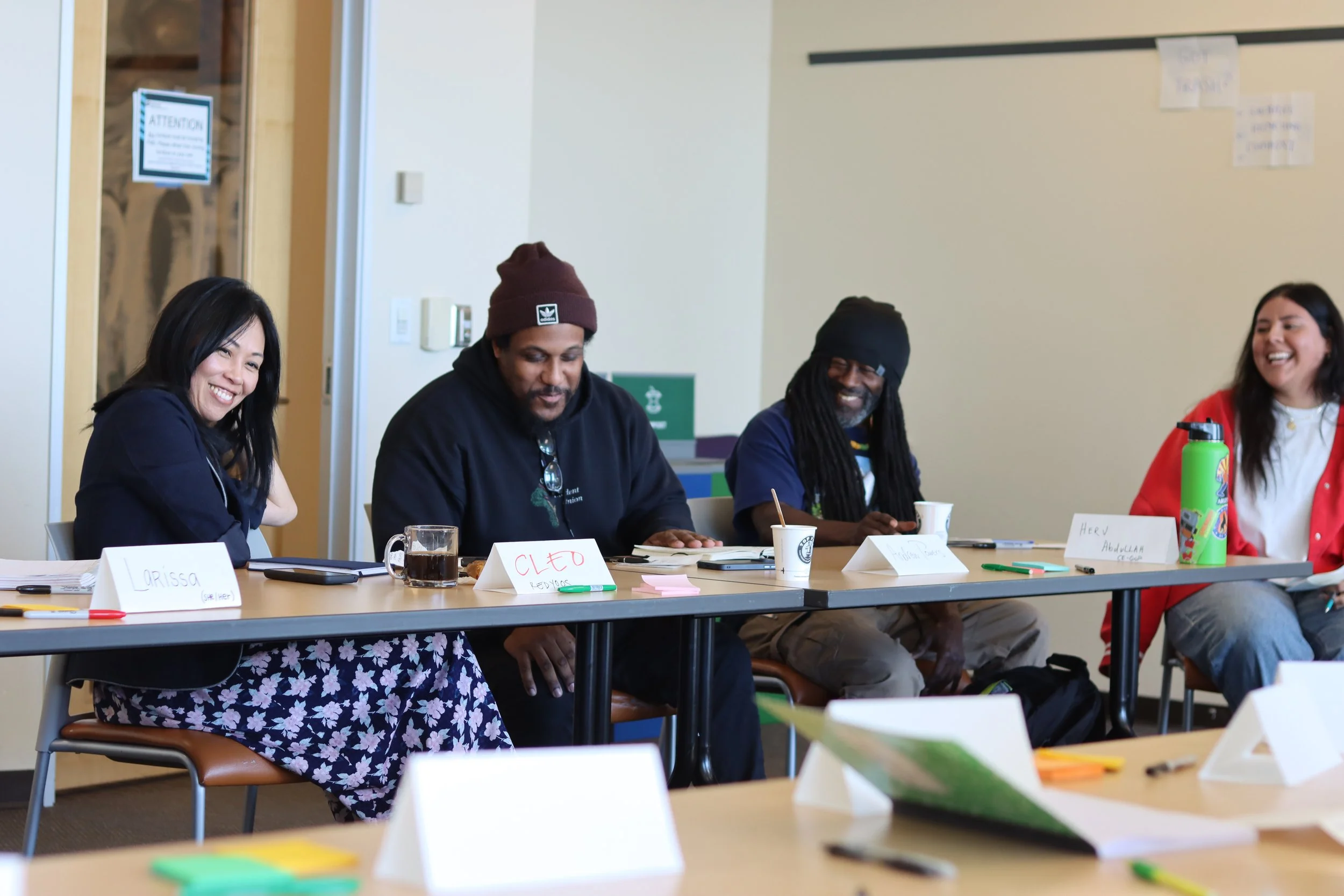
Through the COO Learning Community strategy’s investment in shared learning and spaces to practice innovative solutions, the COO-NextCycle Capacity Building pilot program began in collaboration with King County’s Solid Waste Division and NextCycle Washington with a community co-design process resulting in an open application process and engaged community outreach to participate (more to come on learnings and reflections from co-design and program evaluation!).
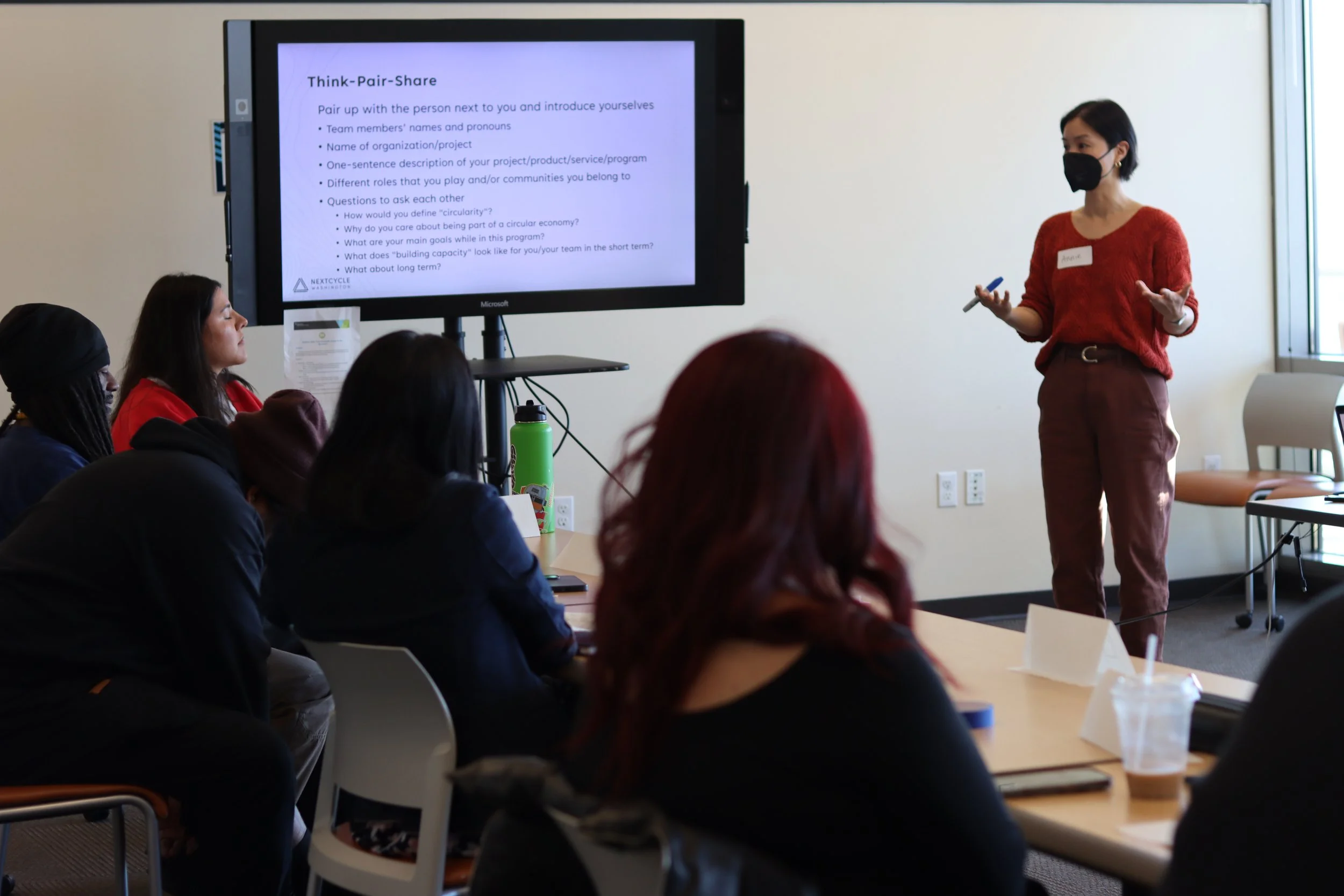
These eight projects, nonprofits and small businesses were selected by a community review panel out of 20 eligible applications, and joined together in sharing knowledge, resources, progress and feedback with one another alongside weekly program sessions on various areas for capacity building and receiving guidance and resources from program coaches. The concept is that early-stage resources – including peer & industry connections, coaching support and programmatic activities can reduce the financial risk of testing a new and innovative models, and give community leaders and entrepreneurs the room to refine, test, and strengthen their ideas and processes while being given the resources to participate in ongoing learning.
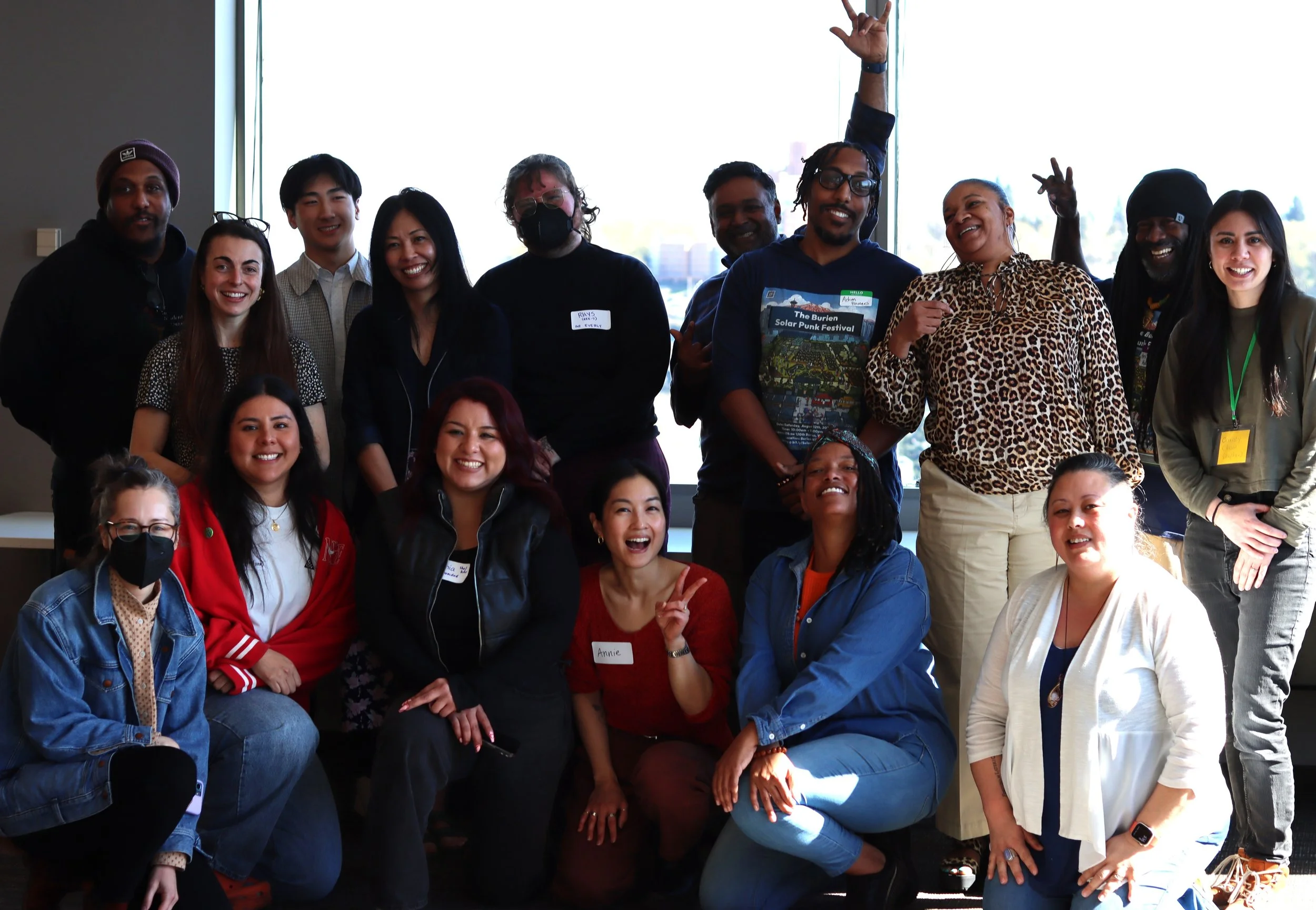
Inaugural COO-NCWA program participants
Blackfox Studios is launching the first physical iteration of the FarmBot Greenhouse, a robotic food system including Re+Filament Farms that turns local plastic waste into 3D filament to print the planters itself and a suite of built entirely from local waste streams. This first site will serve as the primary proof of concept, moving the project from a digital plan to a physical reality. BlackFox Studios
Circular Economy Cooperative - The Washington Circular Economy Hub is a comprehensive and innovative project that embodies the principles of the circular economy by transforming waste into valuable resources and fostering a regenerative local economy. The Hub addresses the linear “consume, discard, and repeat” model by intercepting materials destined for landfills and reimagining them as fuel for new economic and social opportunities. Focusing on repair, reuse, composting, reducing waste, and keeping materials in use through a multi-faceted approach, integrating advanced conversion technologies with robust community programs. The Hub utilizes a decentralized waste-conversion methodology hosted in modified shipping containers. Circular Economy Co-op Website
Cornerstone Youth Collective - The people who benefit most from this project are the same people who are usually left out of both environmental work and funding conversations: Black, Native, Latino, immigrant, disabled, and low-income residents in King County who are moving between homelessness, temporary stays, and permanent housing. In our day-to-day work, we see what happens when someone has to leave a unit, a shelter bed, or a motel with very little notice. They may have a few basic household items a small table, a dresser, a microwave, a set of pots that they cannot move, store, or safely keep with them. Those items are often thrown away not because they are unusable, but because there is no system to hold them or pass them on. At the same time, the next client moving into housing cannot afford to buy those same items new. That is the gap this project is designed to address.
Access to circular economy systems improves in two ways -- by embedding reuse directly into a process people are already part of: housing stabilization. Clients do not have to travel to a reuse center, own a car, or already identify with environmental language to participate. If they are working with us during a move or housing transition, they are automatically included. Second, we will use this pilot to make the process clear, low-barrier, and respectful no shaming for what people own or don’t own, and no complicated rules that make it harder for them to say yes. CYCollective
Dystitchia project: Larissa Garza & the Washington Dream Coalition - The project connects directly to the circular economy through repair, reuse, and upcycling of clothing, reducing the volume of textiles entering the waste stream. Participants will learn sewing, garment reconstruction, and creative redesign to extend the life of existing garments. Clothing that might otherwise be discarded will remain in use within the community, directly reducing landfill contributions. The project also incorporates organic waste reduction by teaching natural dyeing techniques that use food scraps instead of synthetic dyes, reducing chemical pollution and material waste.
The project will operate through hands-on workshops led by graduates of an apparel design and development program, with support from guest educators such as natural dye experts. Participants will also learn from Indigenous and pre-colonial sustainable clothing practices that emphasize care, longevity, and relationship to materials. Washington Dream Coalition
Everly Seattle - Everly’s redistribution program is an early-stage operation that began as a way of diverting unused or unsellable thrift store donations, from partner, Magpie Thrift, away from the landfill and back into the hands of the surrounding community. This nonprofit was built to help our community engage in circular care and resource reuse, with an emphasis on providing for the folks who are most in need first, such as the unhoused, economically disadvantaged, elderly, Queer, and other marginalized communities. However, our capacity to distribute directly is limited due to a lack of funding, so thus far we’ve needed to prioritize redistribution recipients that can run their own pickups consistently until we can expand.
This redistribution program aims to engage locals in a more reciprocal, shared way of life, getting them out of the consumerist cycle and more engaged with their community instead. Everly Seattle Nonprofit: Turning circular care into community action. | Everly
Maximillian Uypeckcuat - This project reduces waste and upcycles broken blades from fencing programs. This early-stage idea relies on local artists and metallurgists to bring this project to life – artists and workers who would benefit from free material to make products to sell.
Redyoos - Jewelry-to-Art Circular Loop- Jewelry waste streams contain valuable materials that can be recovered and reused. Precious metals like gold, silver, platinum, and palladium can be melted and refined back into pure form, even from broken or low-grade pieces. Base metals such as copper, brass, and stainless steel can be recycled or reused in new costume jewelry. Natural and lab-grown gemstones can be removed, cleaned, and set into new designs. Beads made of glass, ceramic, wood, or acrylic can be repurposed in craft or community programs. Chains, clasps, and other findings—especially those made of sterling silver or gold—can be reused directly or recycled. Watches contribute metal casings, gears, and batteries, the latter requiring specialized recycling. Packaging like boxes, pouches, and tags can often be reused or recycled. Even smart jewelry adds recoverable circuit boards and micro-batteries, creating a broader circular-economy opportunity. Recycle Your Jewelry. Support Clean Energy – Redyoos
We Are Comunidad - Through listening to over 1,000 Latino community members annually, We Are Comunidad identified two key needs: access to technology and meaningful youth employment. Instead of purchasing new materials, we are building systems to repurpose what already exists.
Aiming to redirect usable but discarded computers into the hands of low-income Latino youth by partnering with refurbishers who can repair and upgrade donated devices. And upcycling unsold thrift store clothing into culturally inspired streetwear designed by youth interns. Both initiatives keep materials in use longer, reduce landfill waste, and transform “waste” into opportunity.
Stay tuned to learn more about these projects and businesses and the COO-NCWA pilot partnership!